

One of the more difficult questions in B2B marketing is whether the business is pursuing the right audience in the first place.
It’s a question that can get overlooked when attention is focused on channel performance.
Search visibility might be improving. Paid campaigns might be generating enquiries at an acceptable cost. Lead volumes might even be growing.
But those results don’t necessarily tell us whether marketing is attracting the organisations most likely to become valuable customers.
When we look at acquisition performance, we’re interested in more than whether a business can generate demand. We want to understand whether it’s directing investment towards demand that makes commercial sense to pursue.
That starts with a clear view of the ideal customer profile, or ICP.
Key Takeaways:
- A useful ICP separates who could buy from who you’re best placed to win. Similar-looking organisations can be very different opportunities.
- The biggest audience may not be the best one. Broader targeting can lift numbers while bringing in buyers who rarely become good customers.
- Judge Search and Paid by who they attract. Efficient enquiries from poor-fit organisations still waste budget.
- Your pipeline already holds the evidence. Look at which organisations progress, which stall and where you deliver most value.
- Decide who to deprioritise and use the ICP in practice. It should shape keywords, audiences, messaging and how results are judged.
An ICP needs to tell you more than who could buy
Most established B2B businesses have some definition of their target market.
It might include sectors, company sizes, locations, job titles and the types of organisations they typically serve.
That’s useful, but it doesn’t always provide enough direction for acquisition decisions.
Two organisations can look almost identical on paper while representing very different commercial opportunities.
One might have an established need, sufficient budget and a problem the supplier is particularly well equipped to solve.
The other might fit the same industry and employee-count criteria but have limited urgency, a less suitable requirement or a buying process that makes the opportunity commercially unattractive.
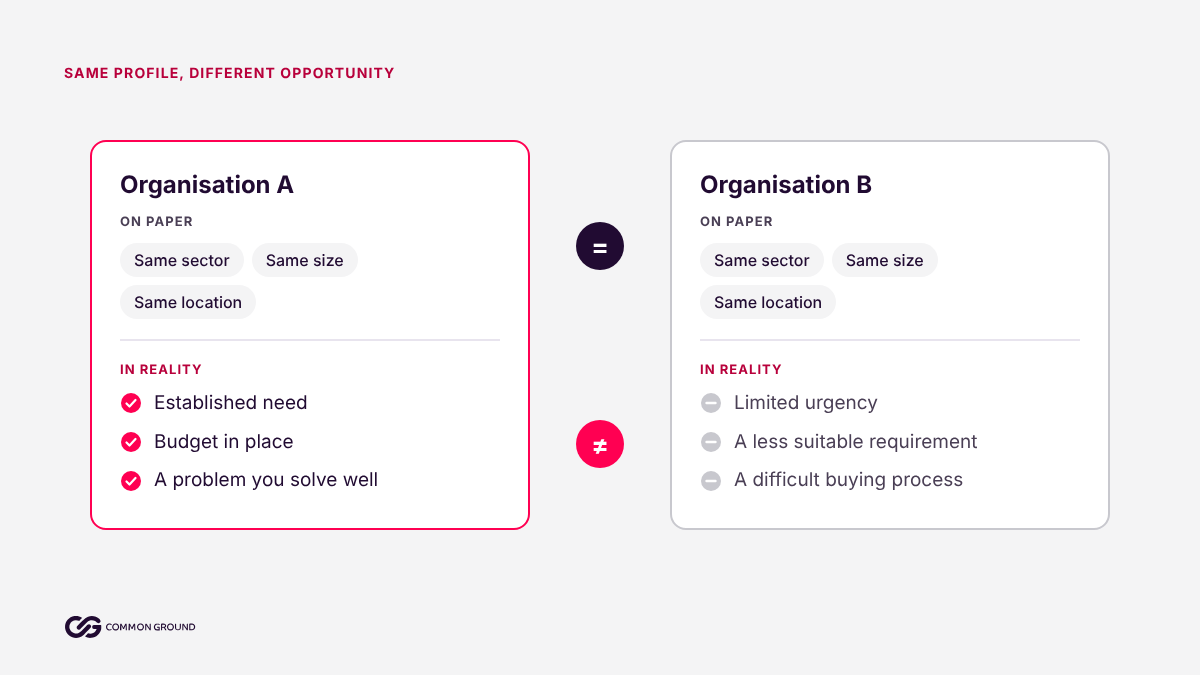
Both technically fit the target audience. That doesn’t mean they deserve equal marketing investment.
A commercially useful ICP should help a business distinguish between organisations it could serve and those it is best positioned to win and retain.
That distinction becomes particularly important when acquisition budgets are finite and buying audiences are relatively small.
The largest addressable audience isn’t always the best opportunity
Broad targeting can make sense when a business is trying to establish where demand exists.
But once an organisation has a clearer understanding of its strongest customers, continuing to pursue every plausible buyer can become expensive.
The temptation is understandable.
Expanding keyword coverage creates more opportunities to attract visitors. Broadening Paid audiences can increase reach. More inclusive messaging can appeal to a wider range of organisations.
The resulting numbers may look encouraging.
The commercial question is whether that additional activity is bringing in more of the buyers the business actually wants.
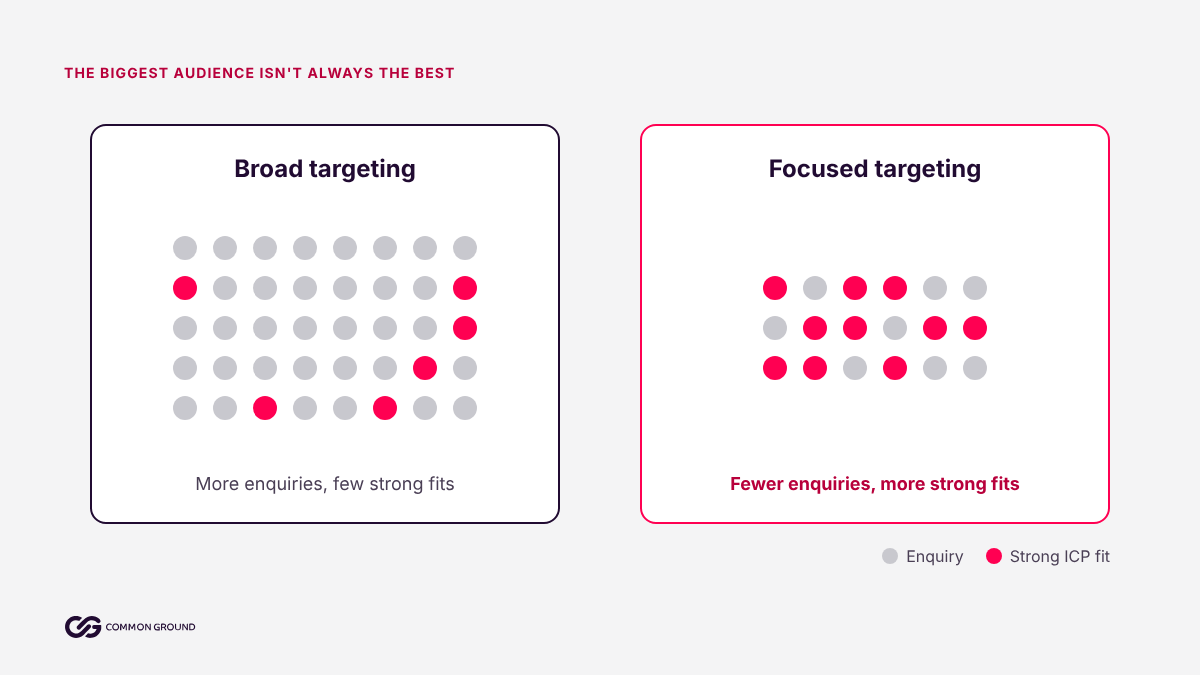
For example, a specialist B2B service provider might attract substantial interest from smaller organisations that need its expertise but cannot support the level of investment required for a successful engagement.
Those enquiries aren’t necessarily poor quality in a general sense. They may be genuine, relevant and commercially serious.
They’re simply not the right opportunities for that particular business.
If marketing continues to optimise towards enquiry volume without accounting for this distinction, it can end up allocating more investment to demand that is unlikely to contribute meaningfully to qualified pipeline.
The objective shouldn’t be to make the audience as narrow as possible. It should be to understand where commercial fit is strongest and prioritise accordingly.
What you will learn in this post
What would +608% ROI look like for your brand?
That’s just one result. We’ve helped B2B brands across sectors scale SEO into real revenue, not just rankings. Want to see what’s possible?
Your best-performing channels may be reaching the wrong buyers
ICP clarity becomes particularly valuable when it influences how Search and Paid are planned.
In Search, keyword relevance is often assessed through the subject matter of a query and the apparent intent behind it.
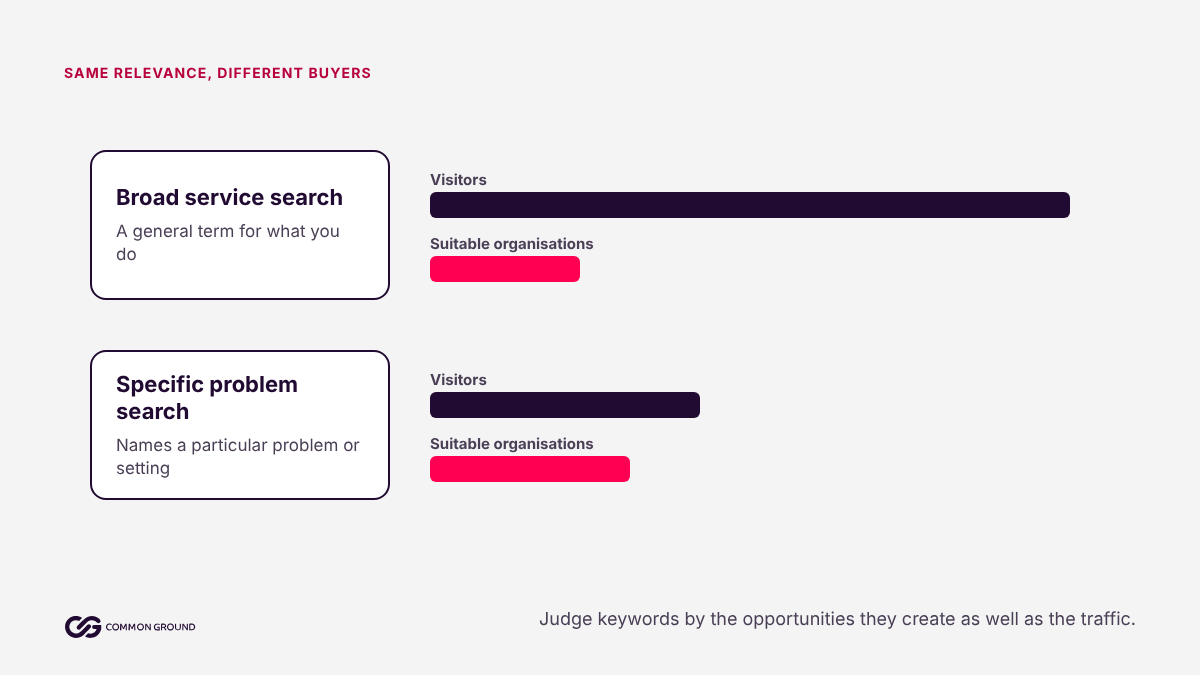
But two searches that look equally relevant can attract buyers with very different requirements.
A broad service-related search might generate substantial traffic while a more specific query, reflecting a particular business problem or operating environment, attracts fewer visitors but more commercially suitable organisations.
That doesn’t mean broad terms have no value. It means their value needs to be judged against the opportunities they help create.
Paid presents a similar challenge.
Campaigns can be optimised to generate enquiries efficiently, but if those enquiries consistently come from organisations outside the business’s strongest customer profile, the apparent efficiency can be misleading.
Better ICP clarity should influence the audiences selected, the problems addressed in messaging, the offers promoted and the way results are evaluated.
This is where acquisition strategy becomes more commercially selective.
The question isn’t simply, “Can we reach these buyers?”
It’s, “Are these the buyers we should be investing to reach?”
Your existing pipeline can challenge your assumptions
One of the most useful starting points for refining an ICP is often information the business already holds.
Which types of organisations progress from enquiry to qualified opportunity?
Which opportunities consistently stall because of budget, requirements or poor commercial fit?
Where does the business have the strongest evidence of delivering value?
And are the organisations generating the most marketing activity the same ones contributing the most meaningful pipeline?
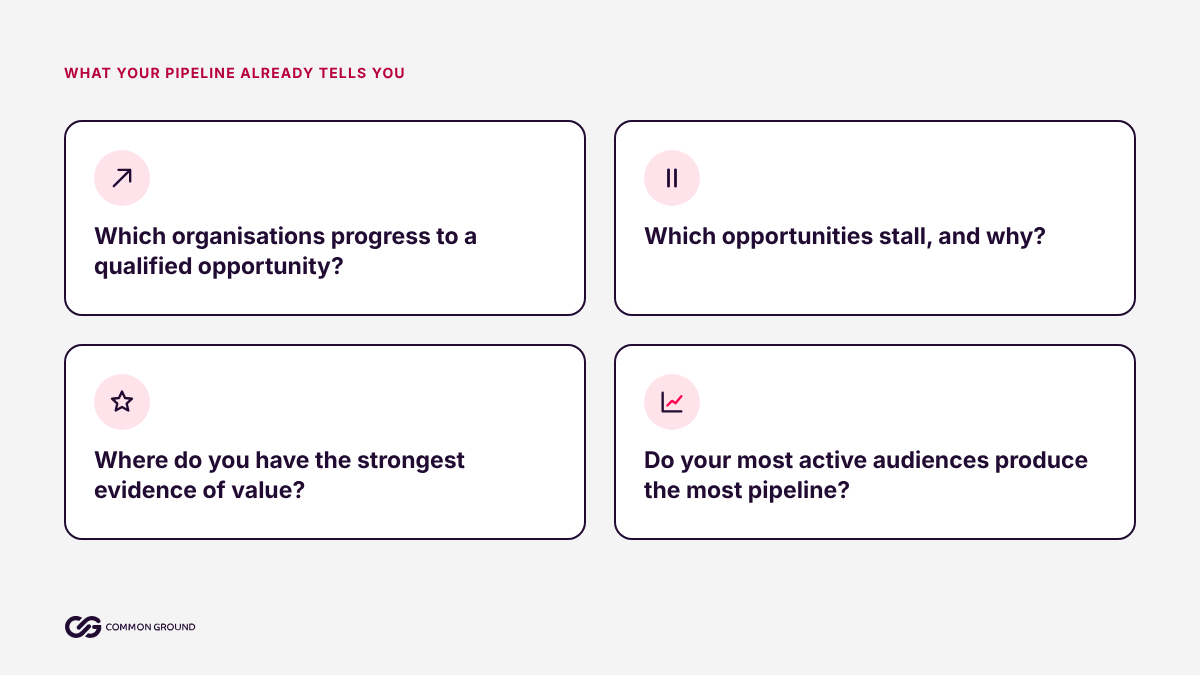
The answers can reveal differences between the audience a business believes it should target and the one its commercial performance actually supports.
That doesn’t mean historical customer data should dictate every future targeting decision.
A business entering a new market or developing a different proposition may deliberately pursue buyers outside its established customer base.
But those choices should be explicit.
There’s a difference between investing in a new audience because it represents a considered commercial opportunity and continuing to attract an unsuitable audience because existing campaigns generate activity.
The first is a strategic decision. The second can become an expensive habit.
Could your brand handle 60% more conversions?
That’s one result we delivered, but it’s far from the only one. From cutting wasted spend to scaling pipeline, our PPC strategies consistently drive performance for B2B brands.
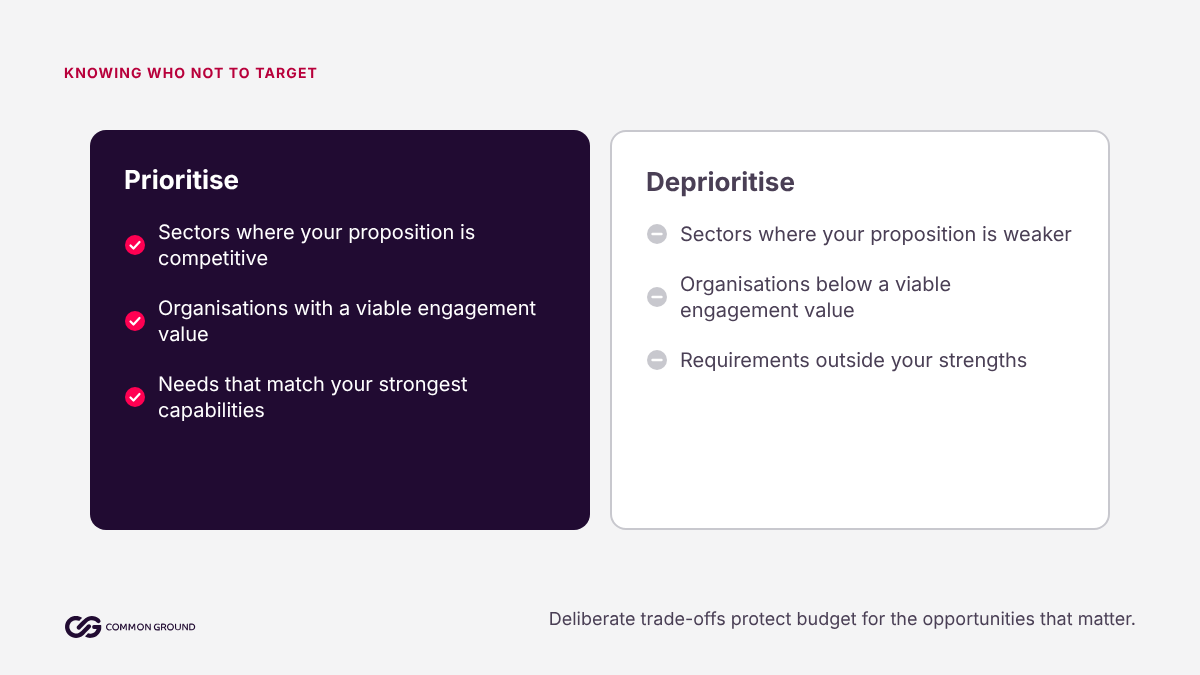
Knowing who not to target is part of a good acquisition strategy
ICP discussions tend to focus on defining the ideal buyer.
In practice, identifying the buyers a business should deprioritise can be just as valuable.
That might mean recognising industries where the proposition is less competitive, organisations that consistently fall below a viable engagement value, or requirements that sit outside the business’s strongest capabilities.
These distinctions don’t need to become rigid rules.
A smaller organisation might still represent an excellent opportunity. An unfamiliar sector might contain an attractive new market.
But without some understanding of where fit is weaker, marketing teams have little basis for making deliberate trade-offs.
This is especially relevant to Paid, where broad targeting can consume budget quickly, and Search, where content investment can be spread across topics that attract attention without attracting the right buyers.
Exclusion isn’t about reducing opportunity for its own sake.
It’s about protecting the time and investment available for the opportunities most likely to matter.
ICP clarity should influence decisions, not sit in a document
A well-defined ICP has limited value if it doesn’t affect what marketing actually does.
It should help determine which search opportunities deserve investment, which Paid audiences are worth pursuing, what problems messaging should emphasise and how acquisition performance is judged.
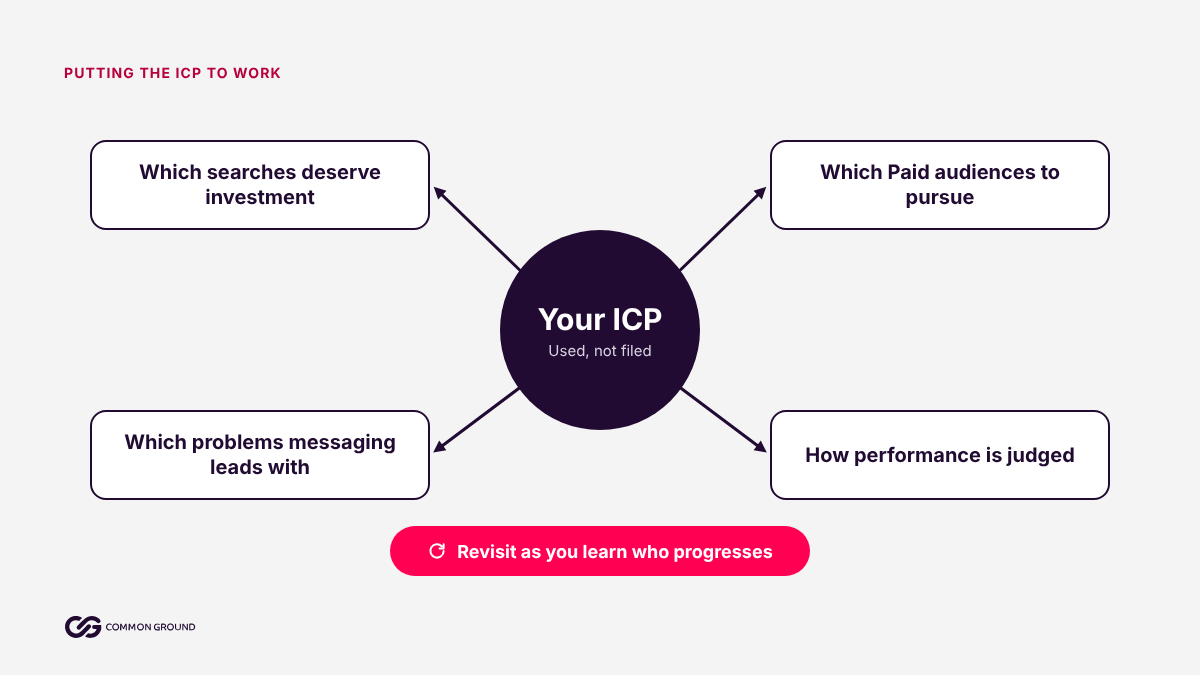
It should also be revisited as the business learns more about the organisations it attracts and the opportunities that progress.
For me, the important distinction is between having a description of the ideal customer and using that understanding to guide commercial decisions.
The former is useful background information.
The latter can materially change how effectively marketing investment contributes to qualified pipeline.
A business doesn’t necessarily need more people to discover it.
It may need a clearer view of which people and organisations are worth reaching.
Are you investing in the right B2B audience?
If your Search and Paid activity is generating interest but too little qualified pipeline, the issue may begin with who you’re targeting.
At Common Ground, we help B2B businesses align acquisition activity with the audiences and opportunities that matter commercially.
Like what you’re reading? Get it in your inbox.
Join hundreds of B2B marketers getting practical SEO, PPC, and content insights. No fluff, no spam, just smart thinking that drives results.