

One of the more interesting situations I encounter when speaking to B2B marketing leaders is when individual channels appear to be performing reasonably well, but the wider acquisition strategy isn’t delivering the commercial results expected of it.
Search is generating traffic and enquiries. Paid campaigns are being managed against agreed targets. Content is being produced consistently.
There’s no obvious failure in any single area.
Yet the business is still struggling to generate enough qualified pipeline, or isn’t confident that its marketing investment is being allocated as effectively as it could be.
In those situations, I become less interested in reviewing each channel independently and more interested in understanding how decisions are made across them.
Because well-managed channels don’t automatically add up to a well-managed acquisition strategy.
Key Takeaways:
- Channel targets and commercial results can drift apart. When each channel is measured against its own objectives, every team can make progress while overall pipeline stays flat.
- The most important decisions sit between channels. Where the next pound goes should depend on available demand, likely return and current priorities, more than on which channel performed best recently.
- Team structure can reinforce silos. Separate specialists, targets and reporting make sense individually, but they make it harder to challenge decisions that look sensible within one channel.
- Aligned channels can still play different roles. Search, Paid and AI Visibility do different jobs and need different metrics. What they should share is a common view of the market, the ICP and commercial priorities.
- Misalignment costs are easy to miss. They show up as missed demand, duplicated effort and spend that continues out of habit, often while channel reports look positive.
When channel performance and commercial performance diverge
Most established B2B marketing teams have reasonably sophisticated channel reporting.
They understand organic visibility, conversion performance and Paid acquisition costs. Many also have visibility of qualified opportunities and pipeline contribution.
Where things tend to slip is in how channels are evaluated: usually against objectives set within their own areas of responsibility.
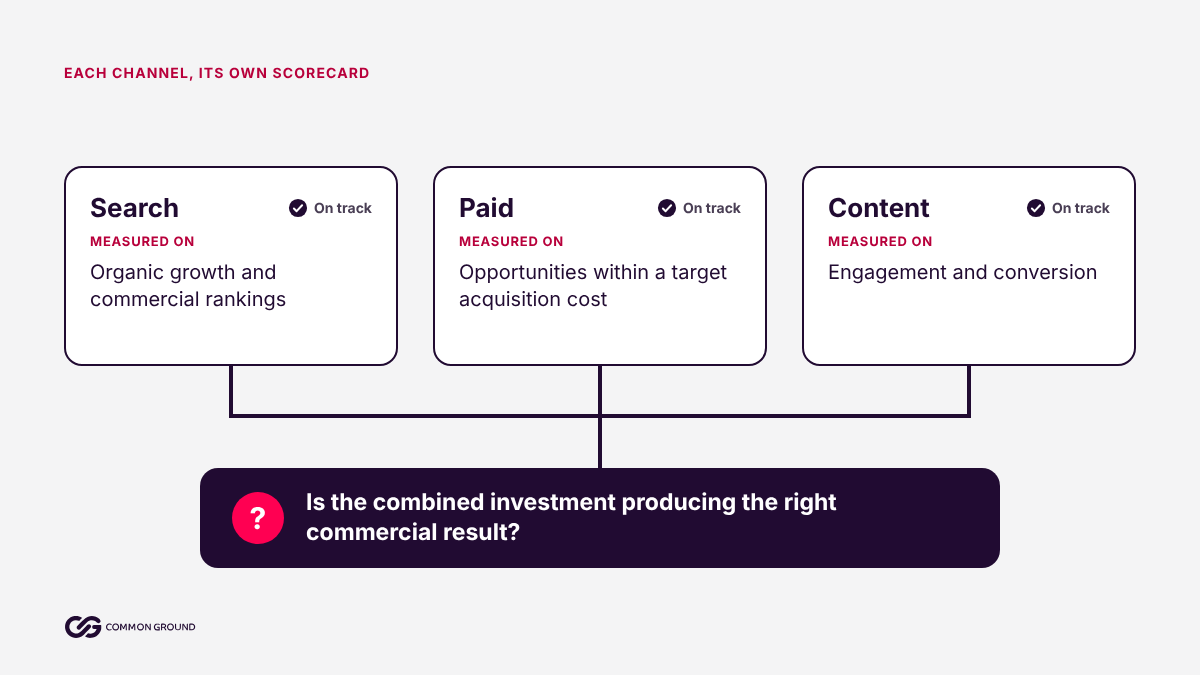
Search might be focused on organic growth and commercial rankings. Paid might be accountable for opportunities generated within a target acquisition cost. Content might be measured against engagement and conversion objectives.
Each team can make progress against its targets without necessarily improving the effectiveness of the wider acquisition mix.
That’s particularly relevant when priorities compete.
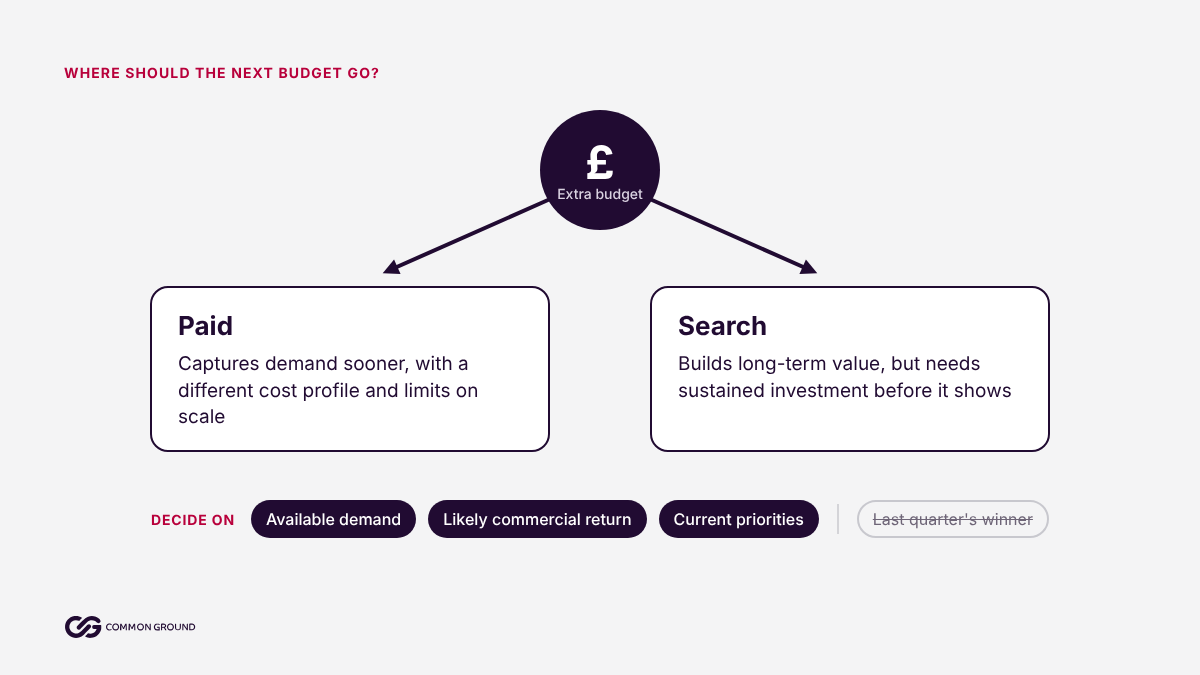
A Search initiative may represent a significant long-term opportunity, but require sustained investment before its contribution becomes visible.
A Paid campaign may offer more immediate demand capture, but with a different cost profile and potential for scale.
Both can be worthwhile. The important decision is how they contribute to the business’s current commercial priorities.
The more useful question is whether the combined investment is producing the right commercial result.
What you will learn in this post
What would +608% ROI look like for your brand?
That’s just one result. We’ve helped B2B brands across sectors scale SEO into real revenue, not just rankings. Want to see what’s possible?
The difficult decisions sit between channels
When discussing acquisition performance with prospective clients, one of the things I want to understand is how the business decides where to invest next.
If additional budget becomes available, what determines where it goes?
Is it allocated to the channel demonstrating the strongest recent performance?
Does it follow an established annual plan?
Or is there a clear view of where the next meaningful improvement in qualified pipeline is most likely to come from?
These decisions aren’t straightforward.
Search and Paid operate on different timescales, influence different parts of the buying journey and offer different degrees of control.
Their contribution also isn’t always captured neatly by attribution reporting.
But those complexities make cross-channel judgement more important, not less.
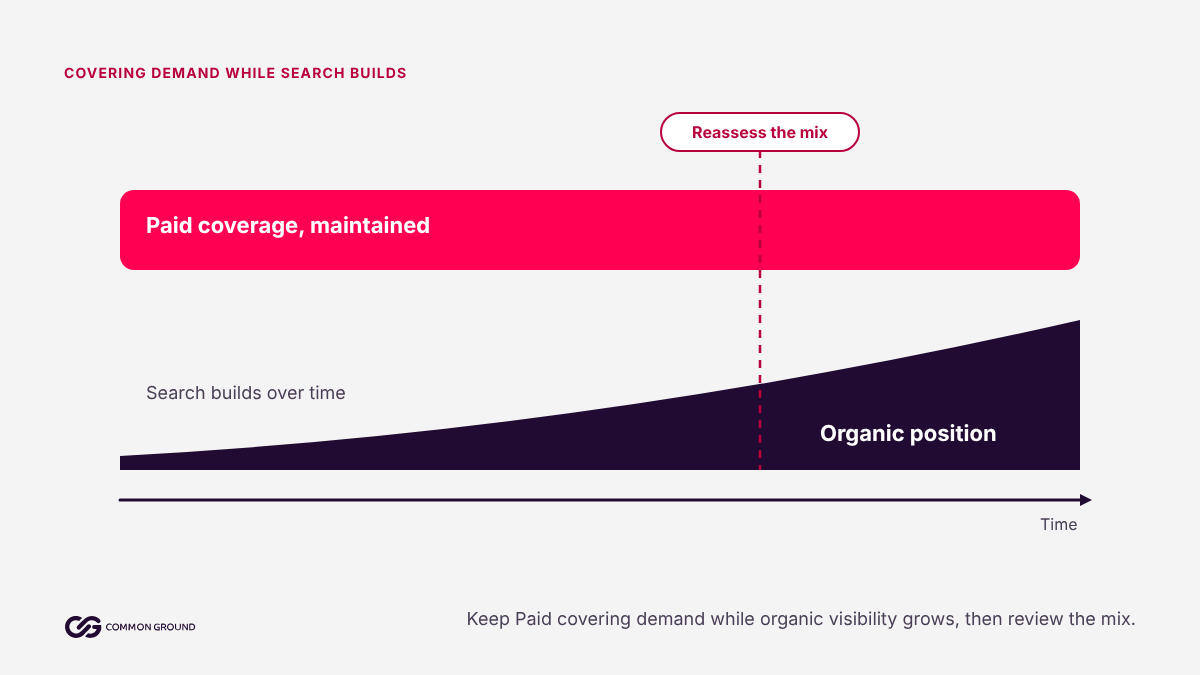
For example, there may be an opportunity to strengthen organic visibility around a commercially valuable area of demand.
Paid may already be capturing some of that demand effectively.
A sensible approach might be to maintain Paid coverage while building a stronger organic position, then reassess how the two contribute over time.
Equally, an established organic presence might create an opportunity for Paid to reach additional audiences or support a particular commercial priority.
The right answer depends on the market, the available demand and the business’s objectives.
What matters is that investment decisions are made with an understanding of the whole acquisition opportunity, rather than the performance of one channel in isolation.
Organisational structure can reinforce the problem
Channel separation rarely happens because someone deliberately decides that marketing should operate in silos.
More often, it’s a consequence of how teams and supplier relationships develop.
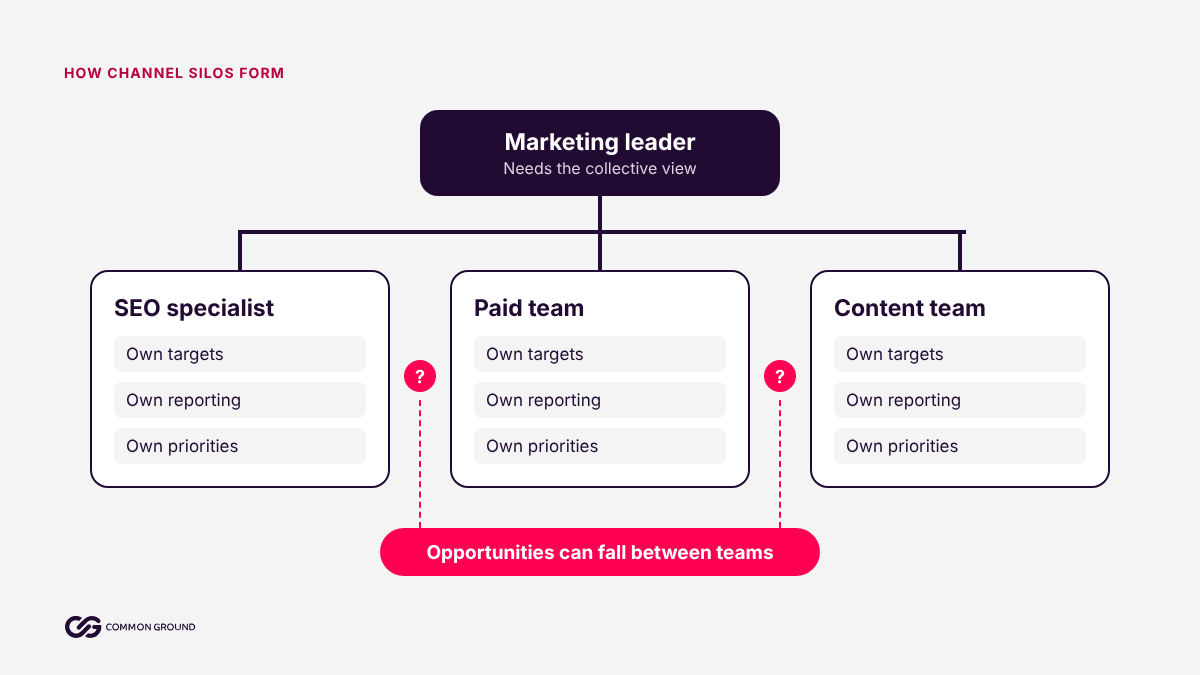
A business appoints an SEO specialist or agency. Paid is managed by another team. Content has its own planning process.
Each function develops its own targets, reporting and priorities.
That’s understandable. Specialist expertise is important, and individual channels need clear accountability.
But the structure can make it harder to challenge decisions that appear sensible within one channel but may be less compelling commercially.
A channel owner is naturally focused on improving the performance they’re responsible for.
The marketing leader, however, needs to understand how those activities contribute collectively to pipeline.
That requires a different level of conversation.
Not just what Search achieved last month or whether Paid met its targets, but whether the acquisition strategy is addressing the right opportunities.
Where is the business already capturing commercially relevant demand effectively?
Where are important opportunities being missed?
Are different teams working towards the same ICP and commercial priorities?
And are there areas where changing the relationship between channels would be more valuable than optimising either one further?
In my experience, these questions can reveal opportunities that aren’t particularly obvious within individual channel reports.
Could your brand handle 60% more conversions?
That’s one result we delivered, but it’s far from the only one. From cutting wasted spend to scaling pipeline, our PPC strategies consistently drive performance for B2B brands.
Better alignment doesn’t mean treating every channel equally
I think there’s a risk of taking the idea of channel alignment too far.
It doesn’t mean every channel should receive equal investment, follow the same targets or contribute to pipeline in identical ways.
Search, Paid and AI Visibility have different roles.
Search can establish and strengthen visibility around commercially relevant organic demand.
Paid can capture and amplify demand with greater control over targeting, timing and investment.
AI Visibility addresses discoverability and representation within generative research environments, where those behaviours are relevant to the business’s buyers.
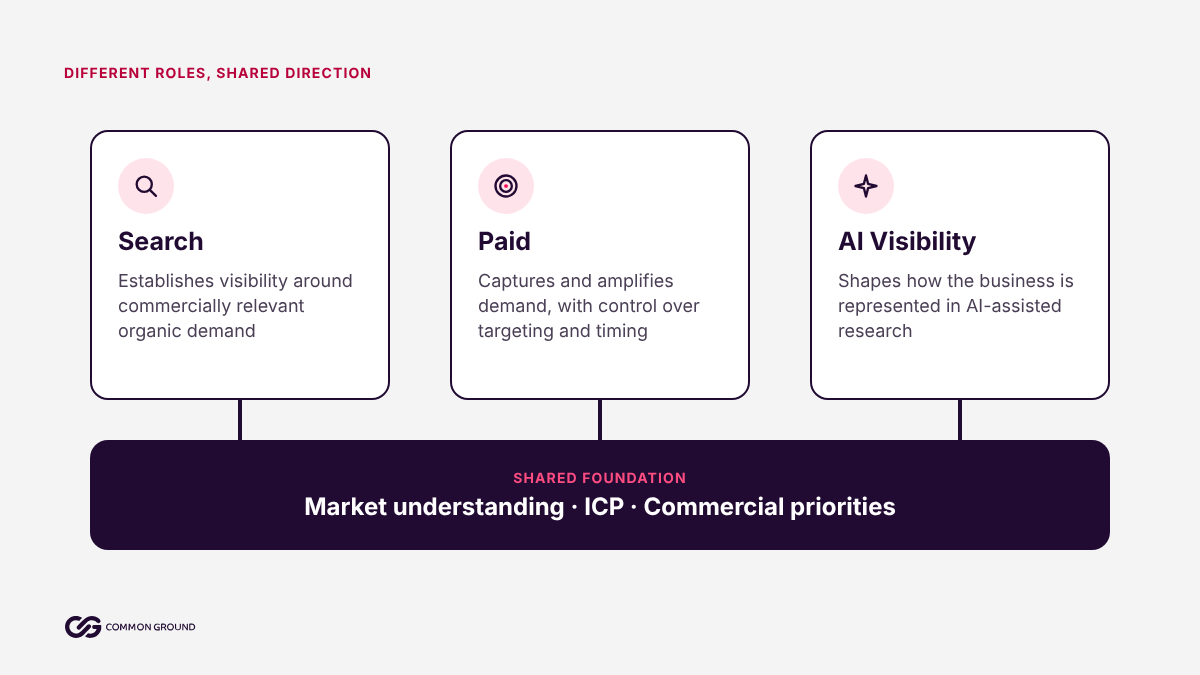
Their operating metrics will differ, as will the evidence available to assess their contribution.
The objective is to make sure their priorities are informed by a shared understanding of the market, the ICP and the commercial opportunities the business wants to pursue.
That also means accepting that the most valuable investment may change over time.
A business with limited visibility around high-intent searches may have a different immediate priority from one with strong organic coverage but an opportunity to accelerate demand capture through Paid.
The right acquisition mix should reflect those circumstances, rather than a fixed preference for particular channels.
The cost of misalignment is often hidden
The commercial impact of disconnected channels isn’t always visible as a dramatic performance decline.
It may appear as missed demand, duplicated effort, investment that continues because it has historically performed well, or opportunities that receive insufficient attention because they sit between established areas of responsibility.
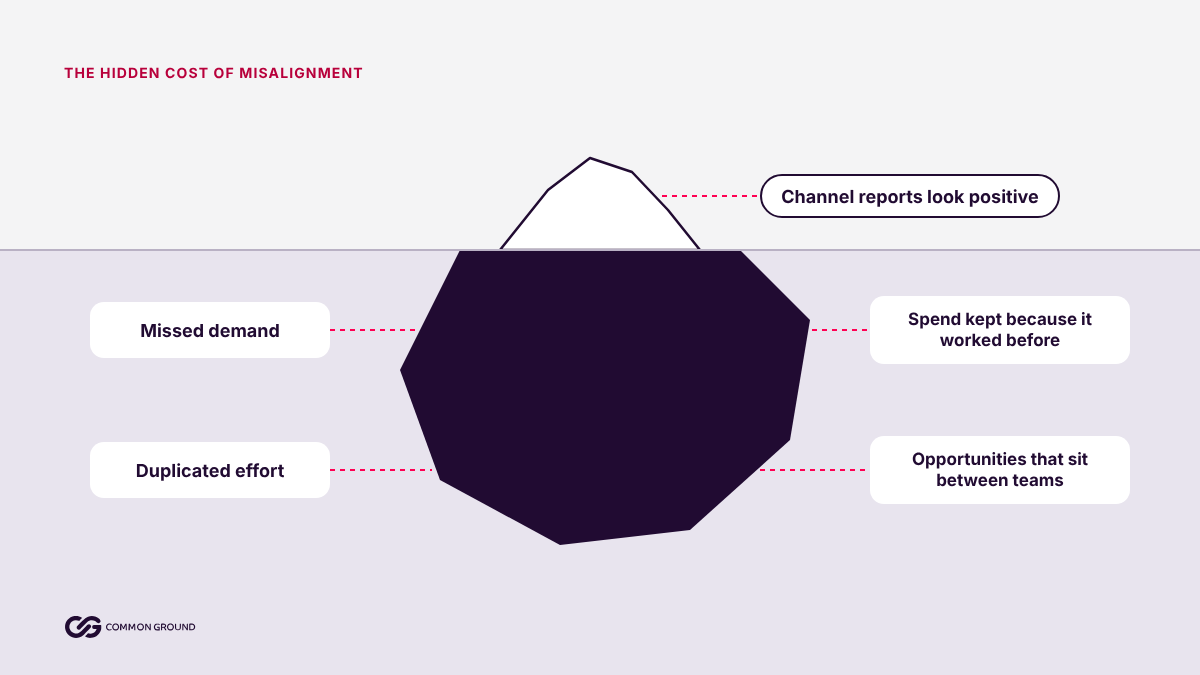
Those inefficiencies can persist even when individual channel reports look positive.
That’s why I think the most useful question for a B2B marketing leader isn’t always how to get more from Search or Paid independently.
It’s whether the business is making the right decisions about how those channels work together.
That requires specialist expertise, but also a clear view of the commercial objective connecting the activity.
The aim is an acquisition mix that’s more effective at generating qualified pipeline.
Could your acquisition channels be working better together?
If Search and Paid are performing individually but the wider contribution to qualified pipeline isn’t where it needs to be, we can help identify where greater alignment could improve results.
Like what you’re reading? Get it in your inbox.
Join hundreds of B2B marketers getting practical SEO, PPC, and content insights. No fluff, no spam, just smart thinking that drives results.